 Kinyarwanda
 Oshiwambo
 Tagalog
 Punjabi
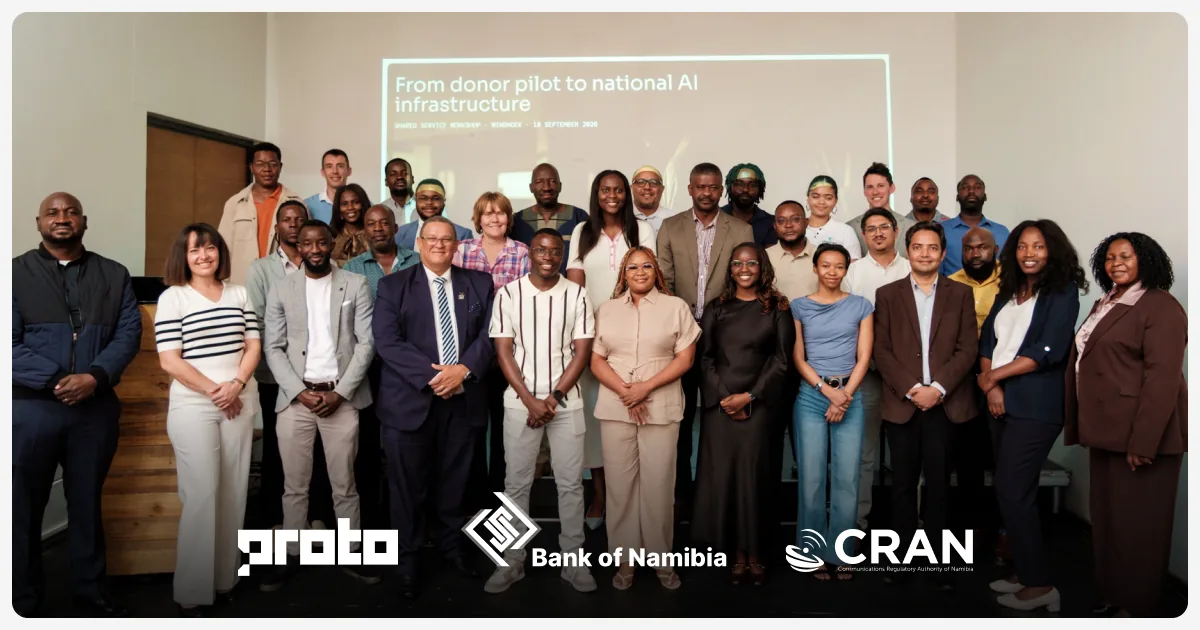
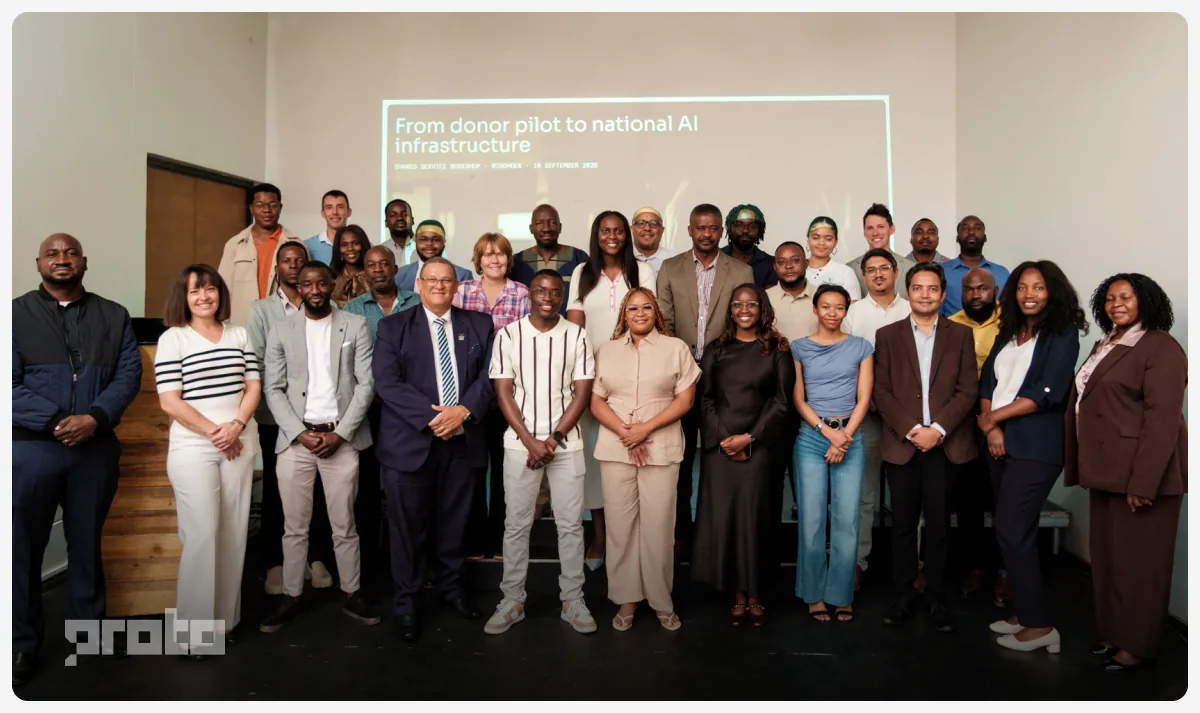
On 10 September, Proto brought together Namibia’s key regulators, ministries and public organisations in Windhoek for an AI Shared Service workshop, hosted alongside local partner ABS.
The Bank of Namibia (BoN) and the Communications Regulatory Authority of Namibia (CRAN) – founding participants of the shared service – anchored the discussion. Both institutions already run Proto’s AI agent infrastructure for consumer protection through ConsumerConnect, the citizen support network that lets Namibians report complaints and scams over WhatsApp, web chat and voice, with cases automatically routed to the right regulator or institution. The workshop builds on an earlier session that mapped the shift from pilot to shared infrastructure, working from what BoN and CRAN have learned running the service so far into what comes next: wider automation and new AI agents across the sector.

From pilot to shared national infrastructure
ConsumerConnect connects the Bank of Namibia, NAMFISA and CRAN into one citizen support platform. Its Oshiwambo voice model – among the first of its kind for a Namibian language, and now live across the platform – was trained on the service’s own grievance redress transcripts, and on-premise hosting keeps citizen data under local control. Interactions have grown by an average of about 39% a month since launch, with monthly volume now approaching 10,000. The shared service model that grew out of it lets a single software and hosting licence be split across regulators and future government agencies, so each new institution joining the network runs on the same infrastructure at a lower unit cost rather than building its own from scratch.
Next for the shared service
Four pillars anchor what comes next:
- Sovereign GPU capacity. Keeping the AI agent infrastructure behind the shared service secure and hosted locally, rather than dependent on external providers.
- Use-case mapping. Identifying where AI agent automation can support public service delivery beyond consumer protection.
- Local language AI. Extending voice and text support to more Namibian languages beyond Oshiwambo.
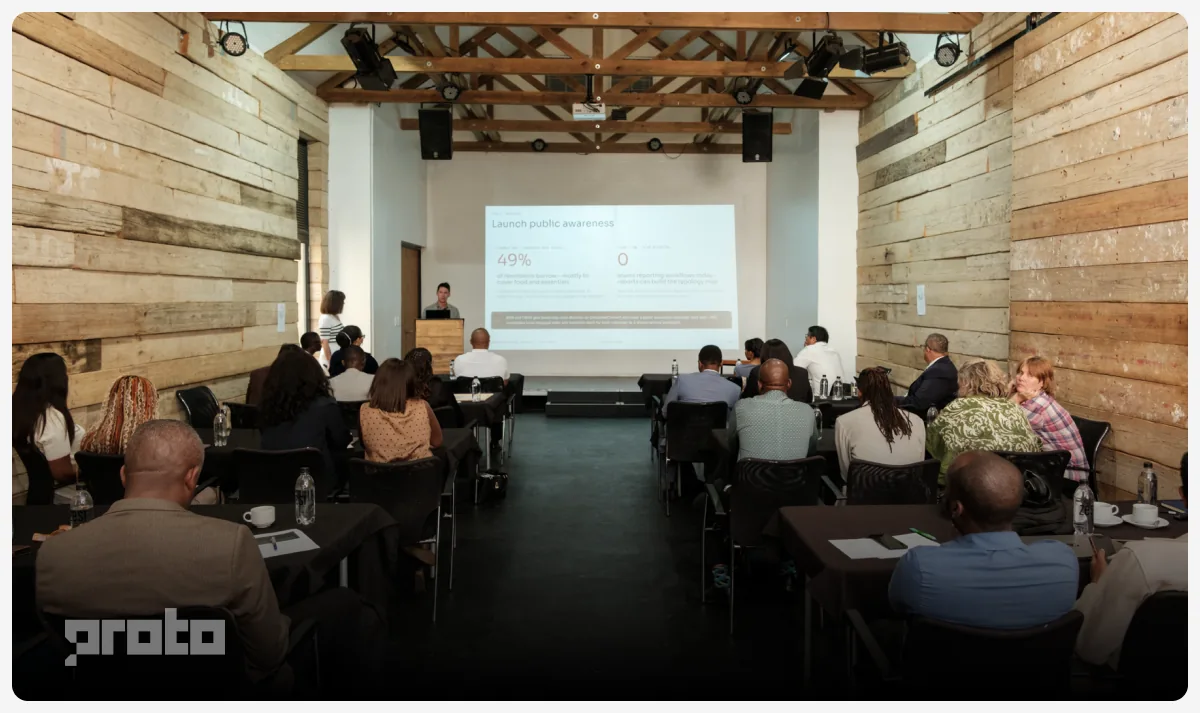
- Public awareness. Making sure citizens know the service exists and how to use it, not just the institutions running it.
Also in the room: the Office of the Prime Minister, NAMFISA, NUST, the Namibian Broadcasting Corporation (NBC), and the Ministries of Justice and Labour Relations; Industries, Mines and Energy; and Education, Innovation, Youth, Sports, Arts and Culture – each weighing how their own mandate could plug into the shared infrastructure.
Watch: NBC’s coverage of the workshop.
Investing in Namibia’s tech talent
Building a shared AI service takes more than infrastructure. Rather than putting the event budget toward branded merchandise, Proto awarded postgraduate scholarships to two NUST students. Both will complete a Certificate in Big Data Technologies (NQF Level 7), delivered by the India-Namibia Centre of Excellence in Information Technology (INCEIT) – training that feeds directly back into the pool of local talent able to maintain and extend the shared service over time.


Why it matters
The shared service model means Namibia’s institutions aren’t each building separate AI agent infrastructure from scratch – they share one capability across mandates, while keeping local ownership of the data and hardware behind it. As more observer agencies join, that foundation extends further, to more institutions and the citizens they serve.
It’s also a model other markets are watching: regulators collaborating on shared digital public infrastructure, with local language support and data sovereignty built in from the start.
About the participants
Bank of Namibia (BoN). The Bank of Namibia is the central bank of Namibia, responsible for promoting monetary stability and a sound financial system. It regulates banking institutions and serves as the government’s banker, financial advisor and fiscal agent.
Communications Regulatory Authority of Namibia (CRAN). CRAN regulates telecommunications services, broadcasting, postal services and the use of the radio spectrum. It aims to promote competition, protect consumers and ensure accessible, quality services.
Namibia Financial Institutions Supervisory Authority (NAMFISA). NAMFISA regulates and supervises financial institutions and financial services in Namibia. It works to foster a stable and fair non-banking financial sector and to protect consumers of financial services.
Apex Business Solutions (ABS). ABS is a Namibian-owned technology firm delivering automation, cybersecurity and software development solutions, with the majority of its delivery capability in-house, supporting organisations across Southern Africa and beyond.